Tuesday

Living the legend - Judy Garland

Judy Garland - The Beginning

The story of Judy Garland is a magnificent example of the truth that life imitates art.

Things would surely have been different had she stuck to being Frances Ethel Gumm of Grand Rapids, Minnesota. As it was, the trajectory of her life under the stage name she assumed at the age of 12, as part of a travelling vaudeville act, had a blighted glamour more appropriate to verismo opera than to the cinema screen. Complete with an abusive father and drunken mother, five marriages, abortion and attempted suicide, the entire scenario transcended the wildest aspirations of melodrama. The irony of a drug overdose carrying off The Wizard of Oz's cute little Dorothy, mascot of can-do America, offered a final ghastly flourish to the story.

Death brought Garland a more dependable and continuous acclaim than she had enjoyed as a living celebrity. Her selfdestructive loneliness had already gained her a large following among homosexuals, who elevated her posthumously to gay-icon status. Other fans, such as Susie Boyt, who was just five months old when Judy died, embarked on a lifelong intimacy with the star, relying on her capacity to inspire as muse, patroness or alter ego, and defining existence by their empathy with her splendours and miseries.

My Judy Garland Life chronicles this kind of bizarre but wholly authentic-seeming relationship. Boyt is at pains to establish herself as being emphatically unlike Judy in almost every way. That her father is Lucian Freud seems to have prompted a reactive craving for ordinariness. She is fond of washing up, once worked in a shop, tried to please her teachers, won deportment badges at school and is evidently (without making too much of a fuss about it) an excellent wife and mother. Beyond this antitype, formed from everything which, at first glance, Garland was not, lies a less emotionally restrained persona, extravagantly responsive to the woman who is both her heroine and in some sense her long-desired sweetheart.
Judy Garland

The book is essentially an autobiography viewed through the prism of Garland-worship. 'Judy makes me feel extraordinary things, ' declares Boyt; 'she allows me to view the world in a way that I like, but scarcely dare. She's not a problem I wish to solve and nor am I.' She sets up a supposed encounter with her in a drycleaner's, along the lines of Henry James's story 'In the Cage', at the same time imagining a meeting in a sanatorium between the damaged star and the drinksodden poet, John Berryman, an episode which Boyt, an experienced novelist, deftly fashions into a short story. She has fun dressing up in Judy's leopardskin hat and muff, and visits the grave in Westchester, New York, where her friend, Marc, cleans the tombstone with vodka in honour of 'the Mightiest Lady of our time'. Her yearning for Judy becomes a dress 'cut on the bias, which sparkles, glossy and sequinned under lights pink and amber'.

In all its ardour and spontaneity, My Judy Garland Life is one of this year's most original books. Mercifully we do not need to share Boyt's adoration, or indeed to give a rap for Judy, living or dead, to enjoy its insights, hankerings and revelations. As a record of the sort of borrowed world few of its readers are likely to have entered with such wide-eyed intensity it appears uniquely memorable.(source)

Sunday

Broadway diva lives up to her billing

John Wayne and Barbra Streisand

When was it first that the term diva was translated from the world of opera to that of showbiz? I wouldn't mind betting that it may have had something to do with the arrival on Broadway of young singer called Barbra Streisand. Today, 47 years later, there is no one in the world of showbiz for whom the term diva seems more apt.

Make no mistake, Barbra Streisand, even now at the age of 65, is a star of the first firmament. The record books speak of that. Streisand is the bestselling female artist of all-time. With 71 million records to her credit she outsells The Beatles and The Rolling Stones and is exceeded only by Elvis. She is one of the few performers to have won an Oscar, an Emmy, A Tony and a Grammy.

But it is only in live performance, in her first UK appearance in the first tour she has ever done in Europe, that the power, range and unique tonal quality of her voice becomes fully apparent.

Stardom is a two-way process. I have never seen an audience so excited as the one that entered the MEN Arena last night. It was like being among a classroom of hyperactive children or amid a troop of horses with the wind in their nostrils.

Something far more intense than mere anticipation shivered through the crowd, a fact that was not merely to be explained by the fact that they had paid (pound)550 a ticket in the best seats - making Streisand the highest-paid concert performer in history. As she walked on to the stage she was met not just with a standing ovation but with a round of ululation not normally thought of as native to Manchester.
Barbra Streisand
From the first song, the big ballad "Starting Here, Starting Now", the audience's faith was justified. It was a voice of enormous power but superb control. Perhaps, at 65, it has lost a little definition - though she may just have had a slight cold, for she sounded hoarse once or twice when she talked. But she demonstrated an extraordinary range and command of styles, moving straight into "Down With Love", a jazzy little number with a walking bass.

But what is stunning is the sheer artistry of Streisand's interpretative range. She sings songs like she's telling a story, unfolding "Papa, Can You Hear Me", from Yentl, as if it had the epic narrative of a grand opera. Some were simple, others were ferociously tricky, and yet they were each delivered with a deceptive ease. She made the lyrics of "What Are You Doing The Rest Of Your Life" sound as though they were words she was spontaneously inventing and speaking to a single person in a private place.

The someone she was talking to was an arena full of fans who sent up cards bearing messages such as: "I have been waiting to see you the whole of my life." She progressed from one song to the next in a way which was not autobiographical so much as the story of the lives of those who listened. She was singing the soundtrack to their joys and sorrows, triumphs and failures.

There were some heavy swaths of sentimentality involved, but Streisand conveyed it with a freshness which was utterly uncloying. She sang "A Cockeyed Optimist" as if it had been written by Kurt Weil. Her encore, "Smile, though your heart is breaking" was dedicated to the drummer of her magnificent 60-strong orchestra. His sister, she hinted, had just undergone some terrible tragedy. She sang it slow, tinged with profound melancholy and enormous emotional power. A diva if ever there was one.(source)

Saturday

Gene Kelly, Frank Sinatra, and Jules Munchin - "New York, New York"

Gene Kelly, Frank Sinatra, and Jules Munchin - "New York, New York..." from the film "On The Town", 1949

Sunday

Barbra Streisand - People

Barbra Streisand - People (from My name is Barbra), 1964

Thursday

Barbra Streisand - When The Sun Comes Out

Barbra Streisand - Singing "When The Sun Comes Out", (Garry Moore Show, 1962)

Wednesday

Barbra Streisand - The Way We Were

Barbra Streisand - "The Way We Were" (Lyrics song,1975)

Monday

Frank Sinatra - Fly Me to the Moon

Frank Sinatra - "Fly Me to the Moon"

Friday

Frank Sinatra Singing And Acting Career

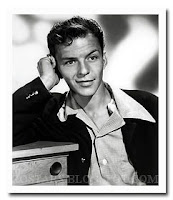
Frank Sinatra
Frank Sinatra, also affectionately also known as Old Blue Eyes was probably the most outstanding popular music singer of the 20th century. Sinatra's only real rivals during those days were perhaps a handful of other singing superstars such as Bing Crosby, Ella Fitzgerald, Elvis Presley, and the fab four or The Beatles.
In a professional singing and acting career spanning more than six decades, Sinatra demonstrated a remarkable ability to maintain his popular appeal to his fans across almost two generations. This is a ringing endorsement of the status of this singing and acting superstar.

Frank Sinatra's singing career started during the big band swing era of the 1930s and 1940s. His first number one hit on the charts was in 1940 and was still making million-selling recording rights up to 1994.
This superb entertainer was able to take the work of great composers of the 1920s and 1930s, such as Irving Berlin, George Gershwin, Jerome Kern , Cole Porter and Richard Rodger and turn their compositions into masterful singing pieces and enshrined them into eternal classics.

Sinatra was the son of a humble fireman and dropped out of high school to pursue a career in singing much to his father's disappointment. In September 1935, the young Sinatra appeared as part of the singing group, the Hoboken Four on Major Bowes' Original Amateur Hour show. The quartet won the radio show contest and toured the country with Bowes.

Sinatra then took up a job as a singing waiter and MC at the Rustic Cabin in Englewood, New Jersey. He was singing there in early 1939, when he was talent spotted by trumpeter Harry James, who had organized his own big band after leaving Benny Goodman, which was another famous big band leader of that era. Harry James hired Sinatra as a singer in his band and Frank made his first recording on July 13, 1939.
Frank Sinatra
At the end of 1939, Sinatra accepted an offer from the more popular big band leader Tommy Dorsey. Over the next two and a half years, he was featured on 16 Top Ten hits recorded by Dorsey and his band, amongst them the legendary chart-buster "I'll Never Smile Again," and was later inducted into the Grammy Hall of Fame.

During this while, young Sinatra also performed on various radio shows with Tommy Dorsey and his band. He also appeared with the band in movies such as Las Vegas Nights in 1941 and Ship Ahoy in 1942.

Frank Sinatra started out his solo singing career in early 1942 showcasing his singing talent by recording a four-song session arranged and conducted by Axel Stordahl. One of the songs was Cole Porter's "Night and Day," and that song went on to become his first hit chart entry under his very own name.

His big break came from his engagement as a singing support act to Benny Goodman at the Paramount Theatre in New York, which began on New Year's Eve. This engagement catapulted his singing career and made him the first real teen singing idol, with throngs of girls screaming and swooning in the aisles.

From then on, Sinatra's singing career never looked back. His singing talent scored him another successful chart topper with "There Are Such Things," occupying number one position in January 1943. Then in August that same year, the singing superstar did another chart buster with "In the Blue of the Evening". From then on, Sinatra successfully scored hits after hits with songs such as "It's Always You,", "I'll Be Seeing You," and "All or Nothing at All".

Frank Sinatra did many radio shows around that time and in April 1943, he made his first credited appearance in a movie, singing "Night and Day" in Reveille With Beverly which launch his acting career.

This was followed by Higher and Higher in which he played a minor role acting as himself and followed up with another movie, Step Lively which was released in mid 1944 in which he played a larger role. In November 1944, he returned to cutting records, beginning with a cover version of Irving Berlin's "White Christmas" which was again another chart topper. Sinatra then hired Styne and Cahn to write the songs for his first MGM musical, Anchors Aweigh, and over the course of his successful singing career, he recorded more songs by Cahn than by any other songwriter.

Anchors Aweigh, in which Sinatra was paired with Gene Kelly, was released in July 1945 and went on to become the most successful film in 1945. He then went on to appear in many more movies such as MGM musicals On the Town and lower budget ones such as The Kissing Bandit.

At the same time, he continued to hit eight Top Ten hits in 1947 to 1949 which included "Mam'selle," which hit number one in May 1947, and "Some Enchanted Evening," from the Rodgers & Hammerstein musical South Pacific.
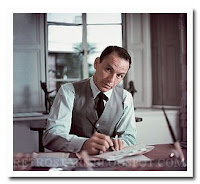
Frank Sinatra

By 1950s, his singing career was on the decline, but he was still very active. At the fall of 1950 marks his first venture into television. His film work had nearly subsided athough in March 1952 he was featured in the drama Meet Danny Wilson which tested his acting skills on stage which gave him the opportunity to sing some of his greatest songs such as Harold Arlen and Johnny Mercer's "That Old Black Magic," "I've Got a Crush on You" by George and Ira Gershwin, and "How Deep Is the Ocean" by Irving Berlin.

Then in 1955, the singing superstar hit number one again with the single "Learnin' the Blues" and the 12 inch album, "In the Wee Small Hours "which was later inducted into the Grammy Hall of Fame.

Sinatra acted in a television special in November 1965, A Man and His Music, and released a corresponding double vinyl album, which reached the Top Ten chart and also went gold. A Man and His Music won the 1966 Grammy for Album of the Year. Following this release, Old Blue Eyes catapulted back to number one on the singles charts for the first time in 11 years with "Strangers in the Night" in July 1966. This song also won him 2 Grammys for Record of the Year and Best Vocal Performance.

Towards the end of 1966, the singer released two more Top Ten albums, Sinatra At The Sands and That's Life. In April 1967, he was again number one on the singles charts with "Somethin' Stupid," a duet which he sung with his daughter Nancy Sinatra. Frank Sinatra's Greatest Hits was a compilation of his 1960s singles successes released in August 1968, was a million-seller.

Then in March 1969, perhaps the most recognized Sinatra song, "My Way," with lyrics specially written for him by Paul Anka was released. This amazing single reached the Top 40, and an album of the same name hit the Top Ten and went gold.

Frank Sinatra then announced his retirement in early 1971 at the age of 55. However, he burst into the limelight again in 1973 with a gold album and a TV special called Ol' Blue Eyes Is Back. In the twilight of his career, Sinatra cut down on producing albums, acting in movies and television in favor of live concert tours.

For six years, he did not release any albums until March 1980 with a three-LP set, Trilogy: Past, Present, Future. The most memorable track from the trilogy set was perhaps "Theme From New York, New York," the title song from the 1977 movie.

He returned to Capitol Records in 1993 and recorded Duets, on which he re-recorded his old songs, joined by other popular singers such as Tony Bennett, Elvis Costello, KD Lang and Bono of U2. It became his biggest-selling album selling over three million copies world wide. This was followed up in 1994 by Duets II, which won the 1995 Grammy Award for Traditional Pop Performance.

Frank Sinatra finally retired from acting and performing entertainment when he turns 80 in 1995. He died of a heart attack 2 years later when he was 82. Today, his songs are still heard in concert halls and clubs all over the world.

Chris Chew is a Frank Sinatra fan and owns a website devoted to music at Learn To Play Piano By Ear and How To Develop A Perfect Pitch

Saturday

Barbra Streisand - "Don't Rain On My Parade"

Barbra Streisand - "Don't Rain On My Parade",1975

Friday

Frank Sinatra - My Way

Frank Sinatra-My Way,1969
This song is especially loved by me.

The Legendary Marilyn Monroe

Marilyn Monroe
There is and old saying that states: Imitation is the highest form of flattery. If this is true then Marilyn Monroe has to be the most remembered women in the history of films. Even today, after more than 45 years after her untimely death,her legendary likeness still appears on T.V.,in magazines and books.

I remember ,even back then, how women[and maybe a few men] would dress like her, walk like her, and even try and sound like her. They would constitutionally talk about her. They would try and outdo each other when the least bit of gossip would appear in one of those supermarket tabloids. I think that to really know her one must know the history of this unique individual. Her apparent vulnerability and innocence, in combination with an innate sensuality, has endeared her to the global consciousness.

She was born Norma Jeane Mortenson on June 1, 1926 in Los Angeles, California, to Gladys Baker. As the identity of her father is undetermined, she was later baptized Norma Jeane Baker. Gladys had been a film cutter at RKO studios, but psychological problems prevented her from keeping the job and she was eventually committed to a mental institution.

On June 19, 1942 she wed her 21-year-old neighbor Jimmy Dougherty, whom she had been dating for six months. "She was a sweet, generous and religious girl," Jimmy said. After he shipped out to the merchant marines, Marilyn got a job on an assembly line and caught the eye of photographer David Conover. After only 2 years she was doing steady modeling jobs and also taking drama classes.Marilyn Monroe (A Lady In a Hat)

She started making a few films and in 1947 she appeared with Betty Davis in "All About Eve" but it was her performance in " Niagara' that delivered her to stardom. And could ever forget "Gentlemen Perfer Blonds" Photoplay magazine voted Marilyn the Best New Actress of 1953, and at 27 years old she was undeniably the best-loved blonde bombshell in Hollywood. On January 14, 1954, Marilyn married baseball superstar Joe DiMaggio. It lasted only 9 months. Marilyn received further recognition for 1959's Some Like It Hot, winning a Golden Globe for Best Actress in a Comedy.

On June 29, 1956, Marilyn wed playwright Arthur Miller.Arthur wrote the part of Roslyn Taber in 1961's The Misfits especially for Marilyn. Unfortunately the marriage ended on Jan. 20th, 1961 The misfits was to be Marilyn's last completed film.

At the 1962 Golden Globes, Marilyn was named female World Film Favorite And if you were alive back then, you would surely remember her singing happy birthday to President John F. Kennedy. But sadly on the morning of August 5, 1962 the 36 year old Marilyn died in her sleep at her home in Brentwood California.

Marilyn's popularity has extended beyond star status to icon. Today, the name "Marilyn Monroe" is synonymous with beauty,and sensuality. The legendary Marilyn Monroe will be remembered long after most of us are no longer here.

Andrew Conway is an avid author,writer and a classic movie buff. If you love watching movies or just listening to great music, then visit: www.Ultimate-Free-Downloads.com

Link

Music
Homerweb Search

Monday

Marilyn Monroe - Anyone Can See I Love You

Marilyn Monroe - Anyone Can See I Love You/Song from the movie "Ladies of the Chorus",1948

Marilyn Monroe - I Wanna Be Loved By You

Marilyn Monroe - I Wanna Be Loved By You/"Some Like It Hot",1959

Marilyn Monroe - Diamonds Are A Girl's Best Friend

Diamonds Are A Girl's Best Friend/Song from the movie "Gentlemen Prefer Blondes",1953(playing Lorelei Lee)

Sunday

Judy Garland-Have Yourself A Merry Little Christmas

Judy Garland-Have Yourself A Merry Little Christmas/"Meet Me in St. Louis",the film was made in 1944

Judy Garland - The Boy Next Door

Judy Garland - The Boy Next Door/Song from the film "Meet Me in St. Louis", 1944

Judy Garland-Trolley Song,The

Judy Garland-Trolley Song,The/"Meet Me in St. Louis",1944

Judy Garland-"Get Happy"

Judy Garland-"Get Happy"/Summer Stock,1950

Judy Garland

Judy Garland - How Ya Gonna Keep 'Em Down On The Farm?/Song from the film "For Me and My Gal",1942